Kawaii Animal Frog Line Background for Spring Projects
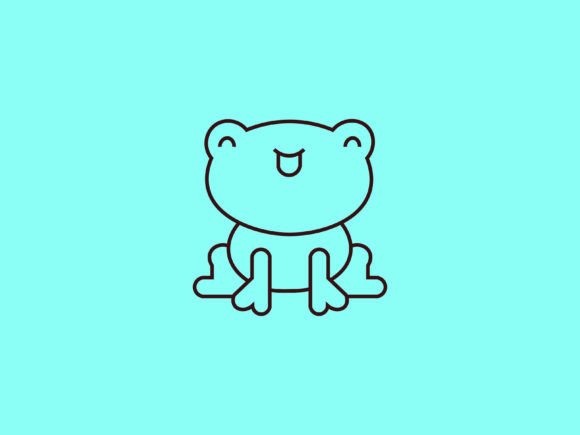
There is a specific kind of energy that a well-executed line art pattern brings to a design. It suggests clarity, intention, and a certain hand-drawn warmth that digital-heavy graphics often miss. When that line work is built around a kawaii frog motif, it becomes a versatile asset for a range of seasonal and year-round projects. This design, featuring a repeating pattern of charming frogs, lily pads, and botanical elements, strikes a balance between playful personality and clean, professional execution. It’s a pattern that doesn’t overwhelm, but rather creates a consistent, engaging texture.
The core appeal lies in its simplicity and character. Each frog is rendered with a friendly, approachable expression—round eyes, a subtle smile, and a posture that feels lively without being chaotic. The line work is uniform and crisp, making it suitable for both digital and print applications where clarity is paramount. This isn't a complex illustration that loses detail when scaled down; it's a pattern designed to function as a background, a texture, and a repeated motif. Its kawaii aesthetic is gentle, leaning more towards sweet than saccharine, which broadens its audience beyond just children. It feels appropriate for Easter themes, spring promotions, or any project that needs a touch of organic, friendly charm.
Practical Applications Across Media
The true test of any design asset is its adaptability. This Kawaii Animal Frog Line Background excels because its style is inherently flexible. For book and notebook design, particularly for children’s books or journals, it can serve as chapter divider backgrounds, page borders, or full-page interior designs. The line art style ensures text remains legible when placed over a lighter, color-adjusted version of the pattern. For publishers and content creators, it offers a quick way to establish a cohesive visual theme across a series of materials.
Move into the realm of product design, and the applications multiply. On a phone case or totebag, the pattern becomes a statement piece—a recognizable element of personal style. For T-shirt design, it works well as an all-over print or as a focused graphic on a pocket area. The pattern’s structure makes it ideal for printed paper goods, like gift wrap, scrapbook sheets, and stationery. Imagine it on a pillow in a child’s room or a cozy reading nook; the design adds personality without dominating the space.
For digital and marketing use, the pattern is a valuable design asset. Social media graphics benefit from its visual interest—it can frame a quote, serve as a background for an Instagram story, or create a cohesive feed aesthetic for a brand centered around nature, wellness, or whimsical products. In web design, a subtle, color-desaturated version could work as a section background, adding texture without distracting from content. For small business owners and marketers, it’s a way to inject brand personality into seasonal campaigns, especially around spring and Easter, without commissioning custom illustration.
Integrating the Pattern into Your Design Workflow
Using a pattern like this effectively requires more than just dropping it onto a canvas. Consider the visual hierarchy of your project. If the frog pattern is the star, pair it with simple, clean typography—a neutral sans serif font for body text and perhaps a complementary serif font for headings to add a touch of contrast. The goal is to let the pattern’s personality shine without creating visual competition. For a more integrated look, you could sample a color from the pattern for your text or accent elements.
The file formats provided are crucial for a professional workflow. The Ai and EPS formats are vector-based, meaning you can scale the pattern to any size without quality loss and easily edit colors to match your brand palette. This is essential for logo design elements, large-format printing, or creating custom colorways. The high-resolution JPG and PNG files at 300dpi are ready for immediate use in print projects or digital work where vector editing isn’t necessary. This versatility makes it a practical commercial font alternative—it’s a premium pattern asset that saves significant design time.
Before finalizing, always test the pattern in context. Place your text over it. View it at the scale it will be used. Check how it looks in both color and monochrome. For packaging design or editorial design, does it support the product’s story? Does it enhance the brand identity you’re building? The pattern’s strength is its ability to act as a supportive, thematic background. It’s a tool for creating atmosphere. Used thoughtfully, the Kawaii Animal Frog Line Background becomes more than just a cute pattern—it becomes a strategic element in your modern typography and design toolkit, capable of elevating projects across print, digital, and product design.